

CLEO Collection Logic · Essay
From Single Object
to Personal System
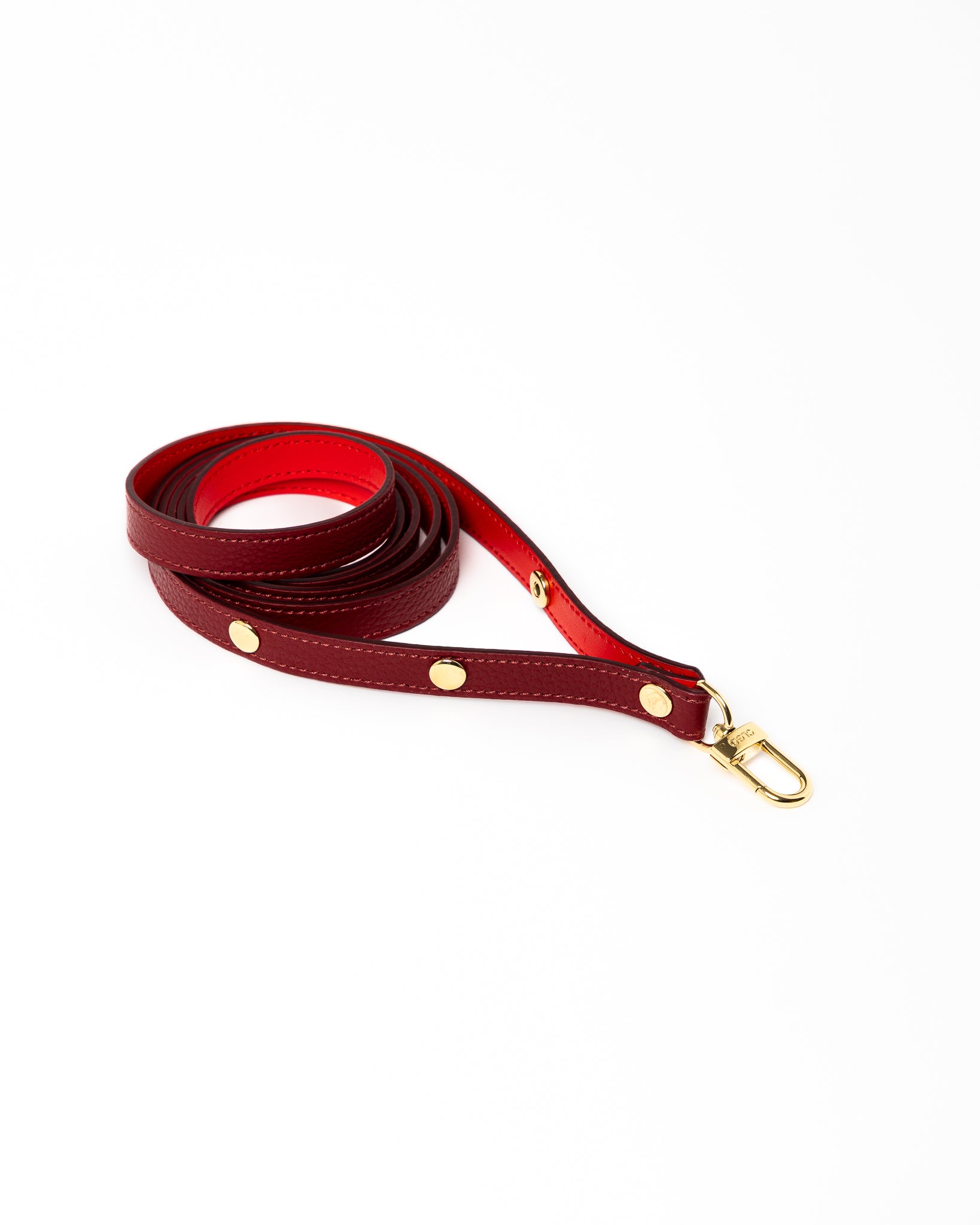
Why luxury is moving away from isolated accessories and toward objects designed to function together.
Chapter 01
Why small accessories create so much visual noise today
Most people do not carry a single accessory. They carry a collection of unrelated decisions.
A card holder from one brand. A key holder bought years earlier. A passport case selected out of necessity before a trip. A lipstick pouch chosen impulsively. A silk ribbon added later because the bag itself felt too severe. Individually, none of these objects are necessarily wrong. Together, they rarely feel resolved.
Luxury has traditionally focused on hero objects like the bag, the shoe, the coat, while the smaller pieces surrounding daily life remained fragmented. Yet these are often the objects handled most frequently: touched dozens of times a day, carried across contexts, left visible on tables, desks, airport counters, hotel receptions.
"Increasingly, smaller objects define how personal style actually functions in practice."
As explored recently by PORTER by NET-A-PORTER, luxury consumers are placing greater emphasis on longevity, versatility, and integration into daily life rather than isolated statement purchases. Fashion is moving away from accumulation and closer toward cohesion.

Chapter 02
What happens when accessories are designed as a system
CLEO approaches accessories differently. Not as isolated products, but as interconnected objects designed to operate together visually and functionally. The objective was never to create excess. It was to eliminate unnecessary decisions.
A glasses case should not visually compete with a card holder. A passport holder should not feel disconnected from the bag it travels with. A lipstick case, key piece, coin holder, or silk twilly should not require separate styling logic every time they are used together.
Instead, proportions, materials, finishes, colors, and hardware are developed as part of the same aesthetic language. This creates something closer to a personal system than a traditional collection.


Chapter 03
Why coordination matters more in quiet luxury
In overt luxury, visibility itself creates coherence. Logos, patterns, and recognisable branding immediately communicate association between objects. Quiet luxury operates differently.
As explored in Business of Fashion and increasingly reflected across brands like The Row or Bottega Veneta, luxury now relies more heavily on proportion, material consistency, silhouette discipline, and tactile coherence rather than visible branding systems.
Under those conditions, poorly coordinated accessories become more noticeable rather than less. The wrong metal tone interrupts continuity. Inconsistent leather textures compete visually. An overly decorative object disrupts restraint.
"The best luxury systems do not attract attention object by object — they create the impression that everything belongs exactly where it is."
Chapter 04
Why modern luxury values reduction over accumulation
For years, luxury operated through expansion: more products, more collections, more seasonal variation, more visible consumption. Today, many clients are moving in the opposite direction.
As discussed recently in Vogue, luxury consumers increasingly value permanence, restraint, and objects that integrate naturally into everyday life rather than requiring constant replacement or reinvention.
The question is no longer simply: "Is this object beautiful?" It becomes: "Does this object continue working with everything else I already use?"
That distinction matters because most people do not want to repeatedly solve the same styling problem for functional objects they carry every day. They want coherence without effort.


Chapter 05
Why miniature objects shape daily experience more than larger ones
Large luxury purchases tend to define moments. Smaller objects define repetition.
A passport holder appears every time someone travels. A card holder is touched continuously throughout the day. A key piece, lipstick holder, or silk twilly becomes integrated into movement so naturally that its absence becomes more noticeable than its presence. These are not occasional accessories. They are operational objects.
Because of that, inconsistency becomes surprisingly exhausting over time. Different materials age differently. Hardware tones conflict subtly. Shapes compete for attention inside the same visual field. CLEO was designed specifically to reduce this fragmentation.
"Everything should feel resolved before the client even thinks about it."

Chapter 06
Why luxury organization is becoming aesthetic rather than purely practical
Organization in luxury used to focus primarily on utility: compartments, storage, functionality. Now it increasingly intersects with aesthetics.
The rise of carefully considered travel objects, desk accessories, compact leather goods, and coordinated personal items reflects something broader happening inside luxury culture itself. Functional objects are no longer treated as separate from personal style. They are becoming part of it.
This is particularly visible among younger luxury consumers who move continuously between work, travel, hospitality, social environments, and digital visibility. Everyday objects are no longer hidden. They circulate publicly through daily life.

Chapter 07
What actually defines a personal luxury system
A personal luxury system is not built around excess. It is built around elimination. Removing unnecessary contrast. Removing visual friction. Removing the need to repeatedly coordinate functional objects from unrelated places, collections, and aesthetic languages.
At its best, luxury should reduce complexity rather than create more of it. That is why CLEO approaches accessories as a connected ecosystem of objects rather than independent products competing for attention individually.
The most sophisticated luxury often feels less like styling and more like resolution.
FAQ
On the luxury accessory system
What is a luxury accessory system?
A luxury accessory system is a coordinated collection of objects designed to function together visually and practically, including leather pieces, silk accessories, hardware, and everyday essentials.
Why do matching luxury accessories matter?
Matching luxury accessories create visual coherence, reduce styling friction, and allow everyday objects to integrate naturally into personal style.
What are miniature luxury accessories?
Miniature luxury accessories include compact leather goods and small everyday objects such as card holders, passport cases, key holders, lipstick cases, coin holders, and silk twillies.
What defines quiet luxury accessories?
Quiet luxury accessories focus on material quality, proportion, restraint, and tactile coherence rather than visible logos or excessive branding.
Why are coordinated luxury accessories becoming more important?
As luxury shifts toward everyday integration and long-term use, clients increasingly value accessories that work together naturally rather than isolated statement objects.
CLEO Collection
Build your personal system
Coordinated leather pieces, silk details, and miniature objects conceived to coexist — designed to remove styling friction from everyday life.