

CLEO Atelier · Essay
What We Rejected
— and Why It Matters
More Than What We Kept
Why luxury is increasingly defined by standards invisible to most people — but impossible to ignore once you notice them.
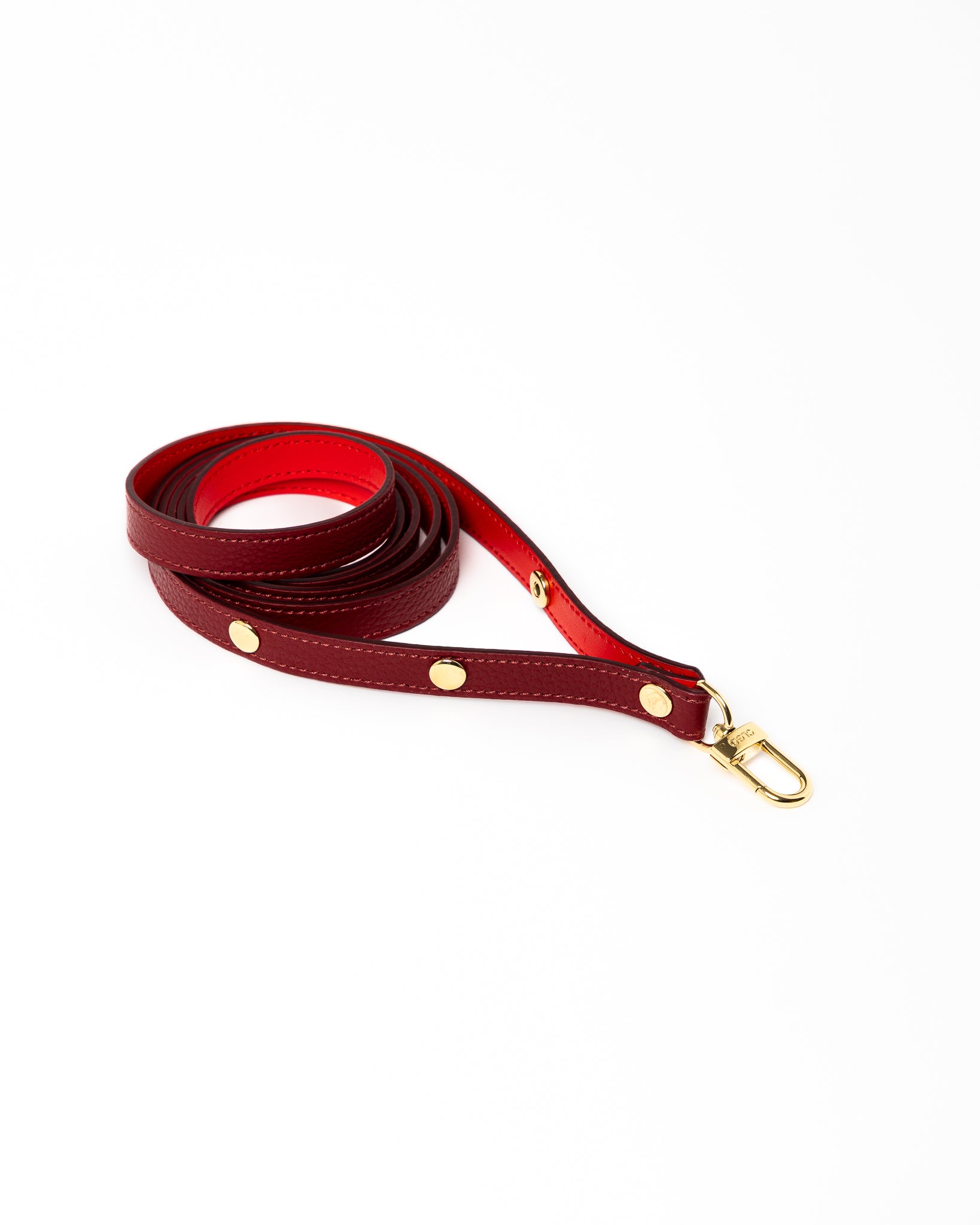
Atelier detail — material credibility at close range
Chapter 01
What defines luxury craftsmanship today
Luxury craftsmanship is increasingly defined not by visibility, but by material quality, construction standards, and long-term durability. Inside CLEO's atelier process, every component — from leather and silk to hardware, stitching, and finishing — was selected through rejection as much as selection.
Luxury has become quieter, but also more demanding. Over the past several years, fashion has shifted away from obvious status signals toward something far more difficult to manufacture: material credibility. The rise of "quiet luxury" was never simply about minimal aesthetics. It reflected a broader movement toward objects whose value reveals itself gradually — through construction, proportion, texture, and permanence rather than visibility alone.
At the same time, the language surrounding craftsmanship has become increasingly diluted. Nearly every brand now speaks about artisanal production, precision, or exceptional materials. In practice, many of those standards are simply industrial baseline presented through elevated marketing.
"The difference often lies not in what a brand chooses, but in what it refuses to accept."
The real quality of an object rarely reveals itself immediately. It emerges later. In corners that soften too quickly, stitching that loses tension, hardware that becomes visually flat through wear, edge finishing that fractures under friction, or leather that photographs beautifully but develops fatigue after months of handling. Luxury is not tested in stillness. It is tested through repetition.

Chapter 02
Why smaller luxury accessories expose quality faster
In luxury accessories, smaller formats expose construction quality faster because stitching, edge finishing, hardware, and leather surfaces are experienced continuously at close range. Large bags can conceal imbalance through scale. Smaller accessories cannot.
When an object is handled constantly and seen from close range every day, every detail becomes more exposed: the density of silk, the resistance of a zipper, the temperature of metal, the sharpness of edge finishing, the way leather absorbs light after continuous use.
Luxury consumers are increasingly evaluating accessories not through overt design gestures, but through tactile longevity and construction details that continue holding attention over time. Fashion has moved closer to the body. Objects are touched more often, observed from shorter distances, and expected to integrate naturally into daily life rather than function as occasional statements. Under those conditions, quality becomes far more difficult to simulate.

Chapter 03
Most "good stitching" is not actually good
One of the easiest ways to recognize industrial luxury is stitching. Many products considered "well made" are simply visually acceptable at first glance — symmetrical enough to communicate quality initially, but optimized primarily for production efficiency rather than structural longevity. Over time, those differences become visible through loosened tension, uneven spacing, or seams that begin competing visually with the object itself.
For CLEO, stitching was approached less as decoration and more as internal architecture. The objective was not simply precision, but stability over time: seams that remain visually composed as the leather evolves through use, movement, and repeated handling.
"The best stitching often becomes less noticeable rather than more."
High-quality luxury stitching should support structure without dominating the object visually. It supports the object without interrupting it.
Chapter 04
Why we rejected multiple leathers before choosing this one
Leather selection is often discussed through broad categories — Italian leather, grained leather, smooth leather — yet those descriptions reveal very little about how a material actually behaves over time. What defines high-quality luxury leather is not softness alone, but how the material responds to pressure, movement, heat, repeated contact, and continuous handling over years of use.
Some leathers appear beautiful initially but reveal excessive correction under direct light, creating an artificial reflection that feels almost synthetic in proximity. Others feel supple in the hand at first, yet lose structural integrity too quickly once exposed to continuous use, particularly in compact formats where corners and folds absorb more tension.
CLEO ultimately selected a combination of structured exterior leather and smoother interior leather developed with a long-standing luxury production partner known for supplying some of the highest levels of the European leather industry. The decision was based not on appearance alone, but on behavior.
The exterior leather maintains structure without rigidity, allowing the surface to absorb and reflect light naturally rather than producing the uniform sheen commonly associated with heavily processed materials. The interior introduces a different tension — smoother, denser, and more controlled in contrast against the exterior texture.
The result is not softness alone, but calibrated resistance. Leather designed to age gradually rather than collapse quickly into wear.

Chapter 05
Why edge finishing matters in luxury leather goods
Edge finishing is one of the first places where construction reveals itself. Poorly executed edges create immediate visual fatigue: cracking paint, excessive thickness, uneven application, or sharpness that becomes uncomfortable during use. Most people process these details subconsciously, yet they strongly influence whether an object continues feeling refined over time.
CLEO uses hot-edge finishing techniques developed specifically for durability as much as appearance. The reason is practical. Edges absorb uninterrupted friction — fingers, tables, bags, movement, pressure, repetition. They are constantly exposed.
Good edge finishing does not draw attention to itself directly. Instead, it preserves continuity. The object remains visually composed because deterioration does not interrupt the silhouette prematurely.

Chapter 06
Why luxury hardware quality matters more than decoration
Hardware determines how an object behaves in motion. Its weight, resistance, closure tension, acoustic quality, and temperature all contribute to how luxury is experienced physically rather than visually. Yet much of fashion hardware is designed primarily for appearance: polished for impact, but often too hollow, too chemically reflective, or too light once handled repeatedly.
CLEO's hardware is developed with a long-standing luxury manufacturing partner specializing in stainless steel construction and advanced coating technologies for international fashion houses. In luxury accessories, hardware quality affects durability, tactile experience, weight balance, and long-term visual integrity as much as appearance itself.
The choice of stainless steel rather than lighter alloy metals was intentional. Stainless steel preserves sharper definition over time, resists corrosion more effectively, and carries a colder, denser tactile response in the hand. Golden hardware is plated with real 23K gold not for excess, but for depth — because genuine gold reflects light differently. The tone feels warmer, softer, and less aggressively metallic than lower-grade finishes commonly used in mass luxury production.
"The difference appears subtle initially. Over time, it becomes unmistakable."

Chapter 07
What defines high-quality luxury silk scarves
Silk is one of the few materials where quality becomes instantly perceptible even to non-specialists. CLEO scarves are produced in 100% silk twill with hand-rolled edges through a heritage European silk production partner responsible for manufacturing soft accessories at the highest level of luxury fashion.
What makes luxury silk scarves high quality is rarely print complexity alone. It is the density of the weave, the fluidity of movement, recovery after folding, and how color settles into the fabric instead of sitting harshly on top of it.
Hand-rolled edges remain one of the clearest indicators of high-end silk scarf craftsmanship because they change how the textile moves around the body. Machine-finished edges often create visual flatness, while rolled edges allow the scarf to hold both structure and fluidity simultaneously.
Luxury fashion is increasingly shifting toward tactile credibility rather than overt visibility. Texture, movement, and material integrity now communicate value more effectively than logos once did.

Chapter 08
What actually defines long-term luxury quality
Eventually every luxury object reaches the same moment: the point where branding disappears and only material behavior remains. At that stage, the client is no longer interacting with campaign imagery, aspiration, or positioning language. They are interacting with zipper resistance, stitching tension, edge integrity, hardware weight, silk density, and the physical memory accumulated through repeated use.
That is why rejection matters more than selection.
Luxury is ultimately revealed not through what a brand chooses to show, but through what it refuses to tolerate long before the final object ever reaches the client.
FAQ
On luxury craftsmanship
What defines luxury craftsmanship?
Luxury craftsmanship is defined by material quality, construction precision, durability, and how an object behaves through long-term use rather than immediate appearance alone.
Why do luxury brands focus on material selection?
Material selection determines how leather, silk, hardware, and construction age over time. In luxury accessories, long-term performance matters as much as initial appearance.
What makes luxury leather high quality?
High-quality luxury leather maintains structure, develops natural patina gradually, and resists premature fatigue, cracking, or artificial surface shine.
Why does hardware matter in luxury accessories?
Luxury hardware affects durability, tactile experience, closure tension, weight balance, and long-term visual integrity.
What makes silk scarves luxurious?
Luxury silk scarves are distinguished by silk density, weave quality, hand-rolled edges, print precision, and fluid movement around the body.

CLEO Atelier
Discover the pieces shaped by this process
Compact, highly resolved objects developed through rejection as much as selection — leather, silk, and hardware calibrated for long-term use.
Explore the collection →